

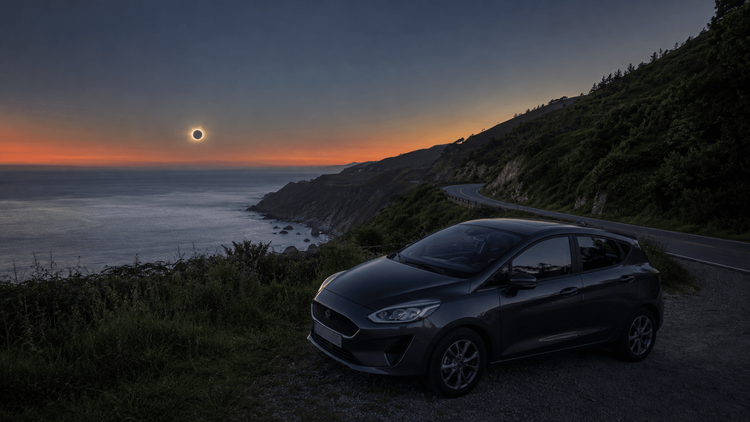
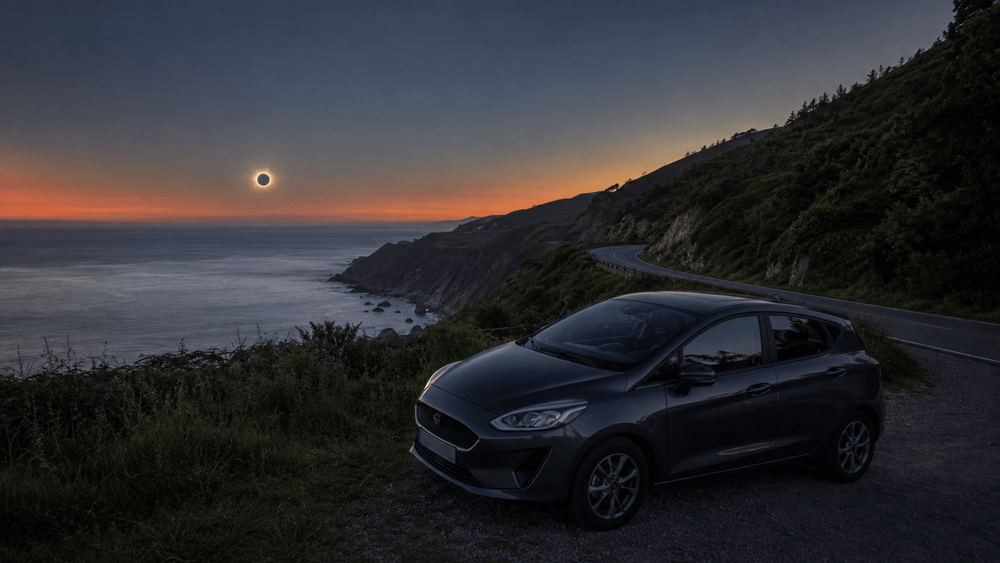
Car Rental Gateway analysed hundreds of thousands of bookings and found that demand in eclipse-path cities was around 50% above the usual level for 10 to 12 August. The effect was strongest in places where the eclipse became fully total.
Northern Spain recorded the biggest booking increase
Mainland Spain produced the clearest result. Car-rental bookings reached 1.9 times the normal mid-August rate, which is approximately 90% higher than usual.
The Balearic Islands recorded 1.4 times their normal rate, equal to an increase of roughly 40%. Iceland reached 1.2 times its usual level. The Icelandic result points in the same direction, but it should be treated more cautiously because fewer cities were included.
These increases do not appear to be part of an ordinary summer travel pattern. The same cities did not record a comparable jump during the equivalent period in other years. Similar cities at the same latitude but outside the eclipse path also showed no increase.
The rise was even clearer among bookings made well ahead of the event. This suggests that people planned trips around the eclipse instead of making a last-minute decision based on weather or availability.
Almost total was not close enough for travellers
One of the clearest findings came from comparing totality with near-total coverage.
Locations with 95% to 99.9% eclipse coverage recorded a booking rate of 1.04 times the control level. That is only a 4% increase and looks much like an ordinary day.
In places experiencing totality, the booking rate reached 1.49 times the control level, representing a 49% increase.
“Totality acted almost like an on-off switch for car-rental demand,” said Hannes Põldvee, Product and Sales Manager at Car Rental Gateway. “The booking increase was limited in places offering almost-total coverage, but it became much stronger once travellers could experience the full eclipse.”
The result shows how precisely people planned their trips. Travellers did not simply head towards the general region. Many appear to have chosen destinations based on whether the eclipse would become fully total there.
Prices and searches supported the booking results. The increase in car-rental prices in eclipse-path locations was 1.83 times as large as the increase in the control group. This does not mean that prices rose by 83%. It means the size of the price increase was 1.83 times greater than elsewhere.
Search interest in eclipse-path locations also rose by 87% during the tracking period.
Earlier bookings and shorter trips point to focused travel
People visiting eclipse-path destinations booked a median of 35 days ahead, eight days earlier than the control group’s median of 27 days.
Their rentals were also shorter. The median rental lasted five days in eclipse-path locations, compared with seven days in the control cities. Together, these figures suggest a focused trip planned around a particular event rather than a longer summer holiday.
The traveller mix changed as well. The share of US residents increased by 12.1 percentage points, by far the largest change among the countries measured. This fits the pattern of long-distance eclipse travellers willing to plan ahead for totality.
The findings offer a practical lesson for travel and mobility companies. A major event can produce a sharp increase in demand within a narrow geographical area, while nearby destinations see almost no effect. Looking only at country-level or regional averages could therefore hide the places where demand is changing most.
For car-rental businesses, city-level booking and search data can help identify these changes early. The eclipse also shows that the exact location of an event can matter just as much as its overall popularity.
Methodology: Car Rental Gateway analysed hundreds of thousands of bookings for the eclipse period. Booking rates for 10 to 12 August 2026 were compared with each city’s usual mid-August rate and with matched locations outside the eclipse path. The analysis also examined booking timing, rental length, traveller origin, prices and search activity. Results were current as of 10 August 2026.