

Car Rental Gateway analysed hundreds of thousands of confirmed bookings and found that booked car rental rates fell 5.0% across its European sample in summer 2026.
The decline also appeared across several major rental markets. For the study’s reference rental, the median daily booked rate fell 12.7% in the United Kingdom, 8.1% in Germany, 7.8% in France and 7.0% in Spain. Portugal and Switzerland were each down 7.6%.
Ireland and Cyprus recorded steeper falls of 16.1% and 13.2%. Poland and Hungary moved in the other direction, rising 15.6% and 26.7%.
“The 5.0% result is useful context, but it is only a starting point,” said Hannes Põldvee, Product and Sales Manager at Car Rental Gateway. “Fleet availability, competition, vehicle mix and seasonal booking patterns may help explain the country differences. The bookings show where rates moved, not what caused them.”
Lower booked rates do not prove demand fell, and higher rates do not prove demand grew. The study measured rates in confirmed bookings, not demand, revenue, fleet size or final customer spending.
What the Results Mean for Rental Operators
The country differences are a reason to look at pricing, fleet use and customer experience together. A clear view of bookings, availability, vehicle status and rates by location can help teams respond to local conditions.
For groups with several locations or franchisees, local teams need room to act while head office needs a clear view across the network. Keeping booking, vehicle and pricing data aligned across branches and sales channels can help avoid stale availability and unintended differences in rates, extras or terms.
Price is only one part of the rental. Accurate availability, clear information and a smooth journey from booking to return can help operators compete on more than price.
Comparing the Same Rental
Car rental rates can change greatly depending on the vehicle and rental length. To reduce those differences, the country comparison used the same reference rental in every market: a mini, economy or compact car booked for four to 14 days.
This was the most common type of rental in the study and represented 52% of its bookings.
“Comparing the same vehicle group and rental length gives a fairer view than putting every booking into one raw average,” Põldvee said. “If customers in one market book larger cars or different rental lengths, the booking mix can change the result before any other factor is considered.”
For the reference rental, the median daily booked rate across 41 markets was €28.91. The median total for a booking lasting exactly seven days was €195. That weekly figure came directly from confirmed seven-day bookings and was not calculated by multiplying €28.91 by seven.
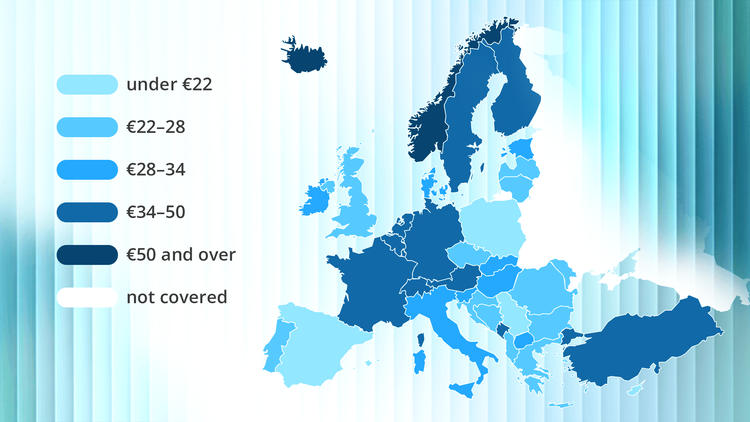
Rate levels also varied widely across countries. Malta had the lowest median daily booked rate for the reference rental at €12.84, while the Faroe Islands had the highest at €111.49.
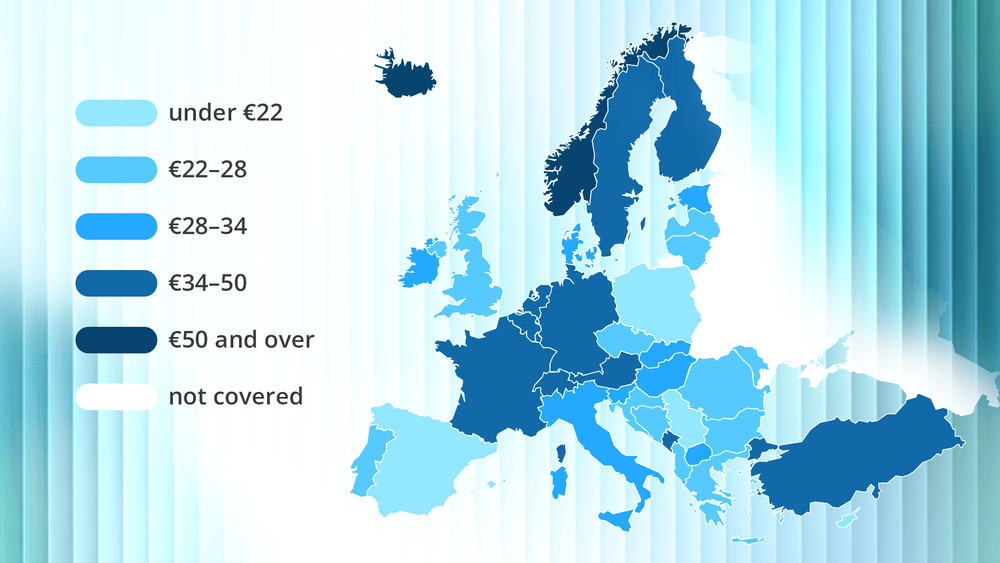
The map shows summer 2026 rate bands, not whether a country’s rates rose or fell from 2025.
Median daily booked rates for a mini, economy or compact car booked for four to 14 days, summer 2026. Colours show rate levels, not changes from 2025.
Vehicle and Transmission Differences
A separate comparison covering all rental lengths found a median daily booked rate of €28.74 for mini or economy cars. For vans or vehicles with seven or more seats, the median was €71.35.
These figures use a different booking base from the country comparison and should not be compared directly with the €28.91 reference rate.
The price difference between automatic and manual cars also varied by market. Within the reference rental, the median booked rate for an automatic was 48% higher than for a manual in Greece. The difference was 35% in Ireland and 34% in the United Kingdom.
By comparison, the automatic premium was 3% in Poland and 4% in Spain. Iceland moved in the other direction, with the median automatic rate 10% below the manual rate.
The wide range in automatic premiums gives operators another reason to review fleet mix by market. Comparing booked rates with local availability and fleet use may help show whether the automatic and manual mix matches what customers are booking. This study did not test that relationship.
Methodology
Car Rental Gateway analysed hundreds of thousands of confirmed bookings with pickup dates from June 1 through August 31, 2026, at European rental branches. The published summer rate data covers 41 markets. The country changes quoted in this article come only from the major markets for which the report published year-on-year results.
The reference rental was a mini, economy or compact car booked for four to 14 days. It represented 52% of all bookings in the report. Medians were used instead of averages so that a small number of unusual bookings would not distort the results.
Prices cover the car only. They exclude extras, insurance, fuel policies and fees. Prices were converted to euros using one fixed exchange rate. The €195 weekly figure is the median total for bookings lasting exactly seven days, not the daily median multiplied by seven.
The vehicle-class comparison covers all rental lengths. The transmission comparison uses the reference rental and covers the 14 largest markets with enough bookings for both transmission types. The underlying city comparison covers only the busiest pickup cities; no city results are used in this article.
Belarus, Monaco and Ukraine were excluded because they had too few bookings for a reliable median. Turkey was included as a European holiday-rental market.