

For years, the car rental industry has managed its daily operations like a vast puzzle whose pieces never stop shifting. Operations are spread across an invisible board: a booking system in one place, a fleet spreadsheet in another, damage notes sent by email, tomorrow’s pick-ups scribbled on a whiteboard, and payment handling that was never quite integrated with the main rental software. And somehow it all holds together, more or less, until something gives way.
That old patchwork model is now colliding with a very different market.
For one thing, cars themselves have become data sources on wheels. Secondly, labour costs are rising, fleet overheads are heavier, and every idle rental car eats into profits. Damage disputes matter even more, and every delayed handover looks less like a rare incident and more like a design failure.
On the other side of the rental desk are customers who expect digital convenience as standard. Over the past decade, airlines, hotels, ride-hailing services and on-demand food delivery have taught customers to expect real-time updates, mobile-first workflows and digital payments, leaving little room for delay. A rental business no longer competes only with other rental companies, but with the best digital experience a traveller has had that week.
J.D. Power, the market research firm, now treats digital tools as one of the seven core dimensions of rental customer satisfaction, alongside ease of rental, pick-up and drop-off, trust, vehicle, staff, and value. What once felt like an add-on, something merely nice to have, is now part of the core rental experience. J.D. Power’s 2025 North America Rental Car Satisfaction Study puts it plainly: at airport locations, customers who bypass the counter save nearly eight minutes on average and report higher satisfaction, yet 80% still stop at the desk first. The demand for a smoother model already exists. The operating reality has simply not caught up.
That is why the most important technology story in rental right now is not about a single app, digital key or any other specific solution. It is about a shift to a connected operating environment, with the commercial, operational and fleet sides working as one through platforms that support counter-based, keyless and hybrid rental models.
The fact that it is cloud-based is by now almost taken for granted.
The Patchwork Is Fraying
Anyone who has worked in the industry knows how heavily the operation relies on staff to bridge the gap between what the system shows and what is actually happening on the ground.
When information is delayed or inconsistent across systems and processes do not quite align, branch teams are left to resolve the friction in real time. A booking may be confirmed, but the matching vehicle is still being cleaned, charged or checked in after return. By the time the customer arrives, staff are already juggling adjustments behind the scenes to make the promise match the operational reality.
That kind of operational strength and mental stamina deserves respect. It helped build many successful businesses. Yet these efforts may not be enough today.
Auto Rental News’ 2025 technology outlook was blunt about what operators now want: tools that help them do more with less, technologies that work together to create a smoother rental experience, and automation that helps them cope with pricing pressure, higher cost and leaner labour models. The message behind that trend list is simple: the old split between customer-facing booking and back-office operations has become too expensive to maintain.
When distribution companies start expanding into operations, fleet control, workflows, payments and digital handover, they are responding to a broader truth: reservation connectivity on its own no longer solves enough. The real challenge in rental is not any single task, but the gaps between them and the need for something that can bridge them.
Why the Model Is Changing
Margins in car rental have always been thin. That is why a missed upsell, an idle car, a delayed turnaround, a payment failure or a damage dispute can quickly add up and, in the worst case, turn expected profit into a loss. In a market this tight, small failures compound quickly.
Auto Rental News’ 2026 coverage of operational technology points to AI and connected vehicle data as practical tools that fleets of all sizes can use to improve efficiency, reduce costs, and support revenue growth. The point is not that every operator suddenly needs an AI strategy. It is that data and automation are becoming practical ways to protect margins in day-to-day operations.
Connected vehicles and telematics are changing the level of real-time visibility rental operators can have. Geotab’s 2026 telematics outlook argues that telematics is moving from a back-office utility to an ‘operational brain’, taking fleets beyond reactive tracking and towards predictive, data-driven decisions. In day-to-day rental terms, that means collision detection, real-time location data, vehicle health signals and faster responses to issues affecting safety, downtime and liability. Once the car is generating usable operational data, it becomes harder to justify running the rest of the operation on delayed or fragmented information.
Behind the scenes, rental is, and for the foreseeable future will remain, a people business. That said, the people working in branch offices should be spending their time on edge cases, revenue protection and customers who genuinely need help. They should not be tied up chasing signatures, checking whether a car has been refuelled or transferring damage notes from one system to another. This is where modern rental technology starts to matter. Routine work has become too expensive to keep doing things the hard way.
Closing the Gaps
In practice, a modern rental operating system starts with a unified, live view of the operation as a whole. Bookings arrive through direct channels, partner channels, brokers and affiliates, while availability reflects the real status of vehicles at the rental location. Branch staff need to know that the car due out is back on site, cleaned, inspected, fuelled or charged and free of any damage issues or maintenance holds. The staff should not have to juggle multiple databases simply to answer a basic question: what can be rented, to whom, from where and on what terms, right now? Pricing, in turn, can be adjusted by location, channel, vehicle class or product model based on demand and availability.
Customer onboarding is the next major area to change. In the previous rental model, document verification, signature capture, payment authorisation and rental agreement generation all took place almost entirely at the branch.
As part of an integrated model, much of that can be completed before the customer even arrives. Identity verification providers such as Jumio offer real-time ID checks for mobility services, allowing businesses to verify customers beforehand. That means the handover becomes less about paperwork and more about confirming that everything is ready. The operational difference is significant. What once took up counter time becomes part of a pre-arrival workflow.
Then comes the handover itself. Not every rental needs to be fully self-service and not every customer will want it to be. Still, the operating model needs to support a range of pick-up modes: traditional desk service, a hybrid fast-track model and fully digital pick-up.
For example, SIXT says its app can serve as a digital key for the vehicle, helping customers avoid waiting at the desk. According to Enterprise GO, the digital key becomes available in the app once the rental begins, allowing the customer to unlock and control the vehicle with a smartphone instead of carrying physical keys.
What once felt experimental is starting to look far more mainstream. In some parts of the market, digital access, pre-check-in, and smoother handovers are becoming part of the customer expectations.
Return is often where the new model shows its value most clearly. A modern return process includes time-stamped condition capture, mileage, fuel or battery level, photo evidence, final charge checks and informed decisions about whether the vehicle is ready for its next rental.
Geotab’s telematics technology emphasises collision detection and instant alerts, while Auto Rental News points to telematics and digital evidence as increasingly important tools in damage management and vehicle recovery. Together, they matter because damage and downtime remain two of the most underestimated sources of loss in rental.
When telematics can confirm a vehicle’s location, monitor fuel or battery levels and flag impacts, it becomes easier to resolve disputes and return vehicles to service more quickly.
For a fleet operator, the rental process does not end when the car returns to the site. It triggers the next set of workflows: cleaning, refuelling or charging, damage inspection and readiness checks. From there, the vehicle may be cleared for its next rental, routed for repair or maintenance, or relocated to another site.
All those steps should move through a visible task pipeline tied directly to the vehicle and its rental record and linked to booking and future availability. That is where rental software is heading. The rental platform becomes an orchestration engine, rather than just a booking engine.
Operators are increasingly looking beyond standalone modules and towards systems that keep booking, vehicle status and operational workflows connected from the moment a reservation is made through to the end of the rental.
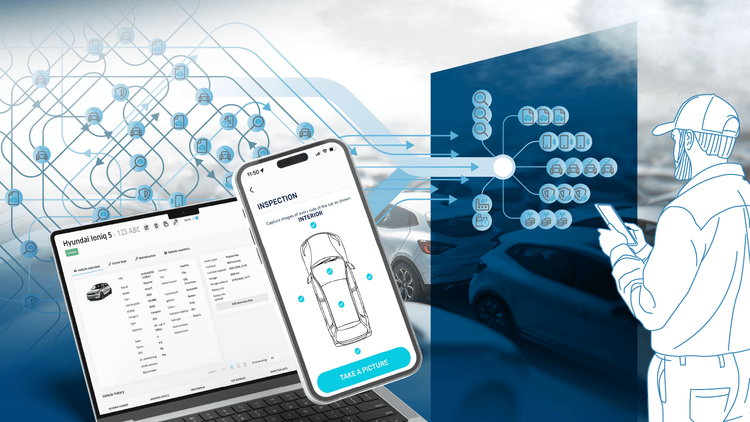
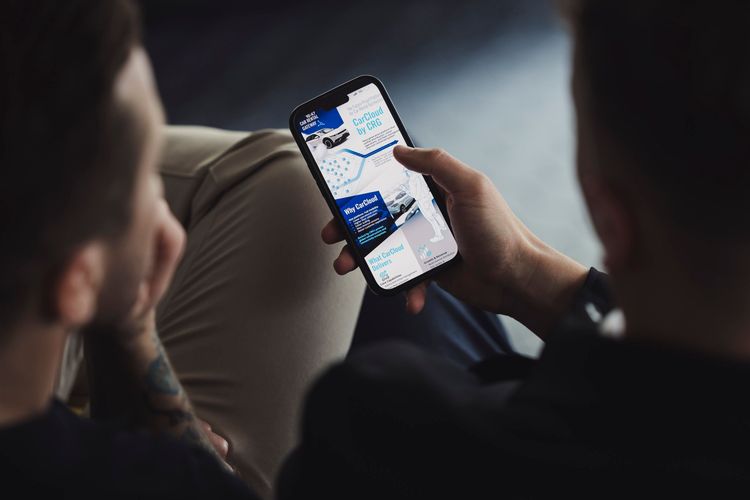
In that context, product launches like CarCloud are significant not simply as standalone announcements, but as signals what’s next.
They reflect a shift from isolated functions to a broader operating structure that connects pricing, contracts, pick-up and drop-off, payments, digital customer journeys, fleet visibility and task management.
Why Connected Data Matters
Cloud architecture and centralised data matter for a clear reason: rental operations break down when branches are working from different information and core records are split across separate systems. From reservation onwards, customer data, vehicle allocation, the rental contract and payment information all need to stay connected. Later, return data, damage reporting, service events and invoicing need to feed back into the same operational picture.
APIs are essential because very few operators can replace everything at once. For many rental businesses, the practical path is not one vast rip-and-replace project, but staged modernisation: telematics, payments, accounting, ID verification and branch workflows being connected gradually into a single stack.
Mobile-first workflows have become increasingly important because the real work of rental happens around the vehicle. Inspections, issue reporting, fuel checks, condition photos and key documents are increasingly managed on a phone or tablet, while maintenance history is accessible in the same workflow.
In practice, that means the employee standing next to the car can inspect it, document an issue, escalate it and trigger the next step without having to walk back to a desk. The phone becomes a clipboard, camera, checklist and exception-handling tool all in one.
Integrated payments are important because money should move through the rental process as cleanly as the vehicle itself. In rental, this goes well beyond the original booking. Deposits, rental extensions, upgrades, toll payments, ancillary sales, subscription billing and damage recovery all become easier to manage when payment is built into the operating flow instead of being handled separately.
Who Benefits Most
The need for a connected system is not limited to large brands. In many cases, smaller and mid-sized operators have even more at stake — every operational problem is felt more rapidly and acutely. A delayed turnaround on a peak weekend, an undocumented windscreen chip, a rate inconsistency across channels or a card authorisation problem at pick-up can all affect revenue, availability and customer experience almost immediately. For these operators, this is not about digital transformation as an abstract goal. It is about reducing blind spots, cutting manual errors and keeping firmer control of fleet availability and cash flow.
Multi-branch businesses often feel the strain first. A single location can run on local knowledge for longer than a network can. Once a business spans several branches, inconsistency becomes expensive. Branches begin to drift from one another: inspection standards vary, pricing is inconsistent, damage is documented differently from site to site, and no one has a clear view across the network. That is where a connected operating model becomes especially valuable for franchise systems, affiliate networks, acquisition-led groups and regional players trying to standardise without disrupting the business as they modernise.
Leasing, subscription and urban mobility businesses also stand to gain because they often combine product models that traditional rental systems were not built to manage well, from hourly rental to flexible subscription, longer-term leasing and keyless access. The commercial offers may differ, but the operational logic is increasingly shared: the same business still needs to verify the customer, assign the vehicle, control access, track usage, manage payment, record damage and decide what happens next.
For a long time, software in car rental was seen mainly as an administrative support tool within a business still organised around the branch. That is now changing. The industry has learned, often through painful experience, that reservation connectivity on its own does not solve enough. What matters now is whether the rental process can run as one connected operation. When it can, work flows more smoothly, staff spend less time resolving avoidable issues and problems are easier to catch early. Car rental remains an operational business at heart, but it is becoming more transparent, more data-aware and more joined up in how it runs. Rental technology is becoming a core operational layer, connecting reservations, fleet, and workflows to support faster, more consistent execution.
***