

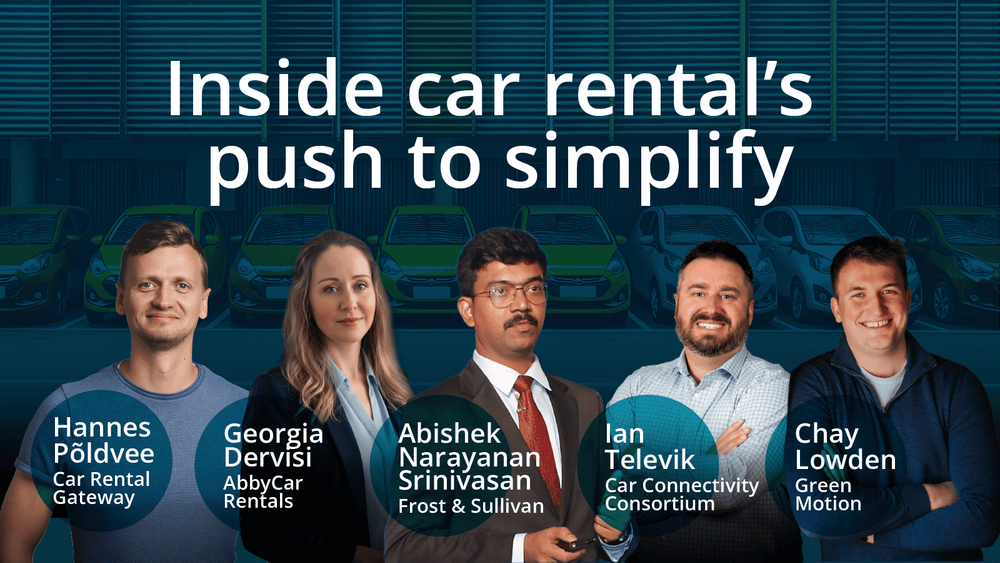
Everyone in the car rental industry could benefit from some transformation. Although demand has rebounded after the pandemic, many of the sector’s underlying issues remain: hidden fees, long queues at rental desks, and disputes over vehicle damage. A more recent challenge, however, is the growing tangle of apps and sales channels.
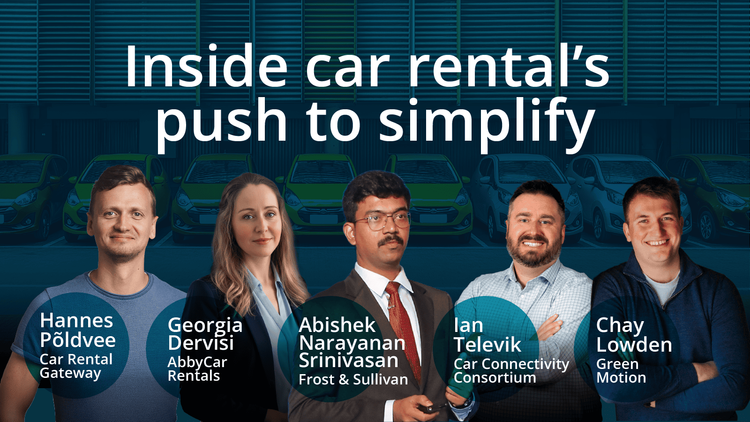
A common theme emerges from five industry experts: make it simpler, more transparent, and let new technology do more of the heavy lifting.
The car rental industry is in the middle of a mixed phase of modernisation, according to Abishek Narayanan Srinivasan at Frost & Sullivan. It’s thriving on post-pandemic recovery while grappling with cost pressures and outdated systems. He also says that hidden fees, disputes over vehicle damage and poor communication continue to erode trust. Continuing lack of transparency regarding what is and isn’t included in the rental price also remains a source of frustration for customers. To fix this, Srinivasan suggests that the industry should move towards all-inclusive pricing and allow customers to select the features and services they want included in their package. Although this approach may slightly reduce margins, it could lead to higher conversion rates and lower dispute-related costs in the long run.
The online booking process and the transparency of the terms and conditions displayed to customers have improved considerably, says Hannes Põldvee at Car Rental Gateway. He credits the European Commission’s actions and industry commitments for helping create a clearer and fairer online presentation for car rental service in Europe. Extra coverage purchased on broker sites, however, still causes confusion among customers, as it may not be recognised at all rental desks. Greater transparency could be achieved if suppliers and distributors agreed on mutually beneficial ways to bundle protection and waiver products, or simply offered more inclusive pricing, Põldvee suggests.
The desk remains a bottleneck
Online booking may be faster and clearer than it was five years ago, but the rental desk remains a bottleneck, says Hannes Põldvee. Customers still encounter unwelcome surprises such as extra insurance costs, hidden fees, or unexpected fuel charges, agrees Srinivasan. To avoid this, the customers need to understand what they are purchasing, stresses Chay Lowden at Green Motion. ‘It’s well known that customers do not read the terms and conditions, where all the information is contained. As an industry, we need to ensure that the key requirements for customers are front and centre across the board.’
Põldvee adds: ‘Quality and vehicle age are unclear behind “or similar” labels, creating a false impression that cars from different rental companies are of equal quality.’ In reality, large multinationals may offer new, low-mileage cars, while smaller local brands with similar listings often may have fleets two to three years old, or even older, he continues. Georgia Dervisi at AbbyCar says: ‘When customers feel confident that “what they see is what they get”, long-term loyalty follows naturally.’
Such friction points, Srinivasan notes, create a negative feedback loop that discourages customers from booking with the same provider again. Disagreements at the desk also lengthen queues leading to more dissatisfaction. People coming off long flights are not expecting to waste hours of their holiday filling in more paperwork.
Distribution needs both control and reach
Most rental companies divide their strategy in two: direct corporate channels provide more control over the bottom line and the brand narrative, while OTAs and brokers help fill capacity among price-sensitive and international travellers, according to Srinivasan.
The key building blocks are strong brand positioning, standardisation, and powerful technology, says Põldvee. Strong brand positioning ensures customers recognise and trust the rental company across every channel, whether booking directly or via a third-party platform. Standardisation of products, pricing, and service procedures maintains consistency across corporate and franchise locations, reducing conflicting offers and customer confusion.
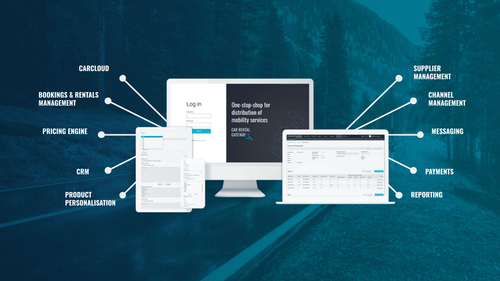
While these foundations are clear, technology remains the hardest piece to execute. Dervisi recommends investing in modern, connected systems and APIs that unify operations as the key to overcoming a fragmented customer journey, helping rental companies move faster, deliver better service, and stay competitive in an increasingly digital travel ecosystem. According to Srinivasan, outdated and siloed software behind many core systems continues to limit true digital transformation, even as new customer-facing apps are deployed. The solution lies in consolidating all operations within a unified digital platform.
Srinivasan sees market leaders using API-driven integrations and centralised rate management to unify inventory, content, and pricing across channels. He points to one example: ‘Europcar’s integration with Amadeus has allowed it to maintain brand control while expanding market reach.’
Põldvee adds that maintaining consistency across corporate and franchise locations depends on reinforcing standardisation with strong brand positioning and a capable channel stack. That mix lets a rental brand scale distribution without diluting its identity.
Vehicle as a concierge
The real technical leap isn’t a fresher app design, but a smarter journey where the administrative side disappears into the background. The future of the industry lies in connected fleet technology and integrated, predictive mobility solutions, says Srinivasan. By investing in the technology, rental companies can automate toll payments, fuelling or charging, and parking, essentially transforming the vehicle into a mobile concierge to make the customer journey smoother.
Connected cars will enable rental companies to improve service in many ways, using real-time location and diagnostic data to enhance the customer experience. For example, they could alert a driver to a slow puncture and direct them to the nearest garage, says Chay Lowden.
The technology is already largely a reality, but there is still no single, universal service that brings it all together.
Marketing teams are seeing the same shift towards services that make life easier for customers while connecting more elements of the journey behind the scenes. Georgia Dervisi at AbbyCar says customers rent experiences, not just cars. In other words, the more integrated the rental cycle becomes for the customer, the less noticeable it will be. She sees a single hub where customers can manage their entire trip in real time. ‘The most impactful innovation will be personalisation, understanding customers so well that every interaction feels tailored and effortless.’ Offers, support and even vehicle preparation should feel tailored to the traveller.
Traditional key handovers add friction
If the customer has completed all the paperwork and passed the necessary checks in advance, they see little reason to stand in a queue just to collect their car keys. If anything can cut those queues, it’s digital keys. That’s also one of the biggest opportunities for growth in the car rental industry. Ian Televik at the Car Connectivity Consortium says the shift is underway, with expectations already set by digital boarding passes stored in digital wallets. ‘A traveller landing after a long international flight wants to skip the rental counter and instantly access their car with a secure digital key on their smartphone.’ For rental companies, digitalisation brings greater efficiency, security and control.
However, the main hurdle, says Abishek Narayanan Srinivasan, is that retrofitting older fleets with the hardware needed for mobile access also adds to the cost. He adds that while keyless, app-based rentals are becoming increasingly feasible, adoption will vary by market and grow unevenly over the next three to seven years.
Ian Televik states that keyless vehicle access will only become mainstream once the experience is both seamless and universally interoperable. He pinpoints the issue as fragmentation across mobile platforms, vehicle brands and rental systems. The Car Connectivity Consortium, which brings together over 300 members from the automotive, smart device and technology sectors, is working to establish global digital key standards for vehicle access, promises Televik. This will be key to scaling automation, cutting costs and improving vehicle utilisation without relying on proprietary systems.
Lowden argues that ‘smarter’, app-based access to rental service isn’t a universal solution. Frequent travellers already benefit from loyalty schemes that streamline the rental process without needing another app, while occasional renters find downloading and verifying a new one each year hardly worth the effort. Until digital adoption reaches critical mass, the human touch will remain an important part of the experience.
Until then, a re-emerging trend of self-service kiosks is bridging the gap between traditional keys and fully digital access, says Põldvee. This ‘second wave’ of kiosk technology builds on earlier attempts at automation, now driven by advances in connectivity, digital identity verification and contactless payment systems. Self-service kiosks allow customers to collect and return vehicles independently, even outside regular opening hours.
Loyalty is earned in minutes saved
Price will always be important, but time is the new currency. Travellers want to reach their destination as quickly as possible and with minimal hassle, says Ian Televik. Chay Lowden agrees that convenience is the only real way to differentiate beyond price: if customers can get the same experience for less, that’s where they’ll go.
Abishek Narayanan Srinivasan adds that using customer data can make this journey smoother. Preparing preferred vehicles in advance and completing paperwork before arrival turns loyalty into saved time, a gesture most customers value highly.
Georgia Dervisi notes that customers return to brands that make their journey easy and stress-free. Personalised communication, transparent pricing and post-rental engagement all help build lasting relationships.
Super apps can boost sales but reduce control
Super apps promise to increase rental volumes but could just as easily squeeze margins and wrest control of customer data. Srinivasan warns that operators will need to balance the pursuit of scale with maintaining control over their brand and pricing power.
Much, says Põldvee, will depend on how these platforms approach car rental. If they act as distributors and allow supplier brands to remain visible to consumers, they could serve as an additional channel for generating new business. However, if super apps present rental as an opaque service under their own brand and predefined conditions, especially when enabled by keyless technology, operators will face trade-offs between higher volume and reduced control over brand, data and customer loyalty.
Dervisi believes the future lies in smart collaboration. Super apps will inevitably redefine how travellers move through the mobility ecosystem, she says, but rental brands that remain visible, trusted and distinct within those platforms will be the ones that thrive.
The practical move is to prepare for each scenario. Rental companies should build the systems and partnerships that allow them to integrate smoothly with super apps without surrendering control over pricing or brand identity. That means ensuring consistent rates and standardised content across channels, keeping customer data connected to their own platforms, and maintaining clear brand signals wherever their offers appear.
Evolving rental models
Rental companies are increasingly prioritising monthly car subscriptions and blending their services with car sharing and ride hailing models. These aren’t entirely new trends, says Põldvee, but they offer opportunities to improve fleet utilisation and tailor services to different customer segments.
Car sharing is often handled in separate apps, so integrating it into rental platforms or distributor networks would let customers find the nearest vehicle in one place instead of switching between apps. The challenge, he adds, is aligning partnership models with commercial goals and customer acquisition, since car sharing usually generates lower transaction values than traditional rentals.
Lowden agrees, noting that most major rental companies already offer these services, while smaller players struggle to match the scale required.
The year 2035 outlook
McKinsey & Company projects that 90% of vehicles sold by 2030 will be connected, creating new opportunities to simplify every step of the rental process, says Televik, referring to its research. With connected vehicles and AI integration come predictive operations, continues Srinivasan. Key applications include dynamic pricing, demand forecasting, fraud detection and automated damage assessment, an area already being developed by companies such as Netradyne, Lytx and Nexar. Manual vehicle inspections used to tie up staff and cause delays, but AI-driven damage detection is now automating much of this process. The biggest gains will come from real-time vehicle connectivity, which improves utilisation, predicts maintenance needs and reduces downtime. Companies such as Geotab and Samsara are already demonstrating measurable improvements in fleet uptime.
Põldvee is confident that digital rental journeys and keyless access will be standard by 2035. Yet how many of those vehicles will be fully electric? Srinivasan predicts that by then, the car rental landscape will include a much larger share of electrified fleets, but several issues remain for now. He points out that uncertainty over the resale value of used EVs remains a barrier, particularly for larger fleets. Charging infrastructure is still limited, contributing to range anxiety, while charging times, though improving, remain lengthy. Sourcing energy sustainably also continues to be a challenge. Dervisi adds that charging points are often scarce in popular holiday destinations, making EV use more difficult for travellers.
Where to start now
Srinivasan recommends investing in a unified platform that integrates all legacy systems and standardises core operational processes to stay competitive. He notes that while fleet connectivity is essential, the real advantage lies in using analytics teams to turn data into insights that drive smarter decisions. Põldvee adds that customer data can also be used to develop new service KPIs and strengthen performance tracking.
Põldvee believes the greater challenge is one of mindset. Rental firms need to think and operate like e-commerce businesses, with digital rental desks open around the clock rather than physical desks limited by office hours. This means reworking processes, teams and partnerships to fit new digital workflows instead of trying to force technology into old structures. He suggests starting with selecting the right technology partners and investing in digital identity verification, seamless online payments and keyless vehicle access.
Echoing previous experts, Dervisi advises investing in technology that connects booking, operations and communication, while keeping transparency, automation and personalisation at the core. She emphasises that innovation should never come at the expense of empathy. Customers remember how they were treated, not just how quickly they picked up the keys.
Car rental has more tools and more pressure than ever before. The winners won’t be those with the most integrations across sales channels, but those who make the journey feel simple and natural. They’ll be the ones with transparent pricing, a car that’s ready when the customer is, and a digital key that opens it. A brand that values people’s time, every single time.